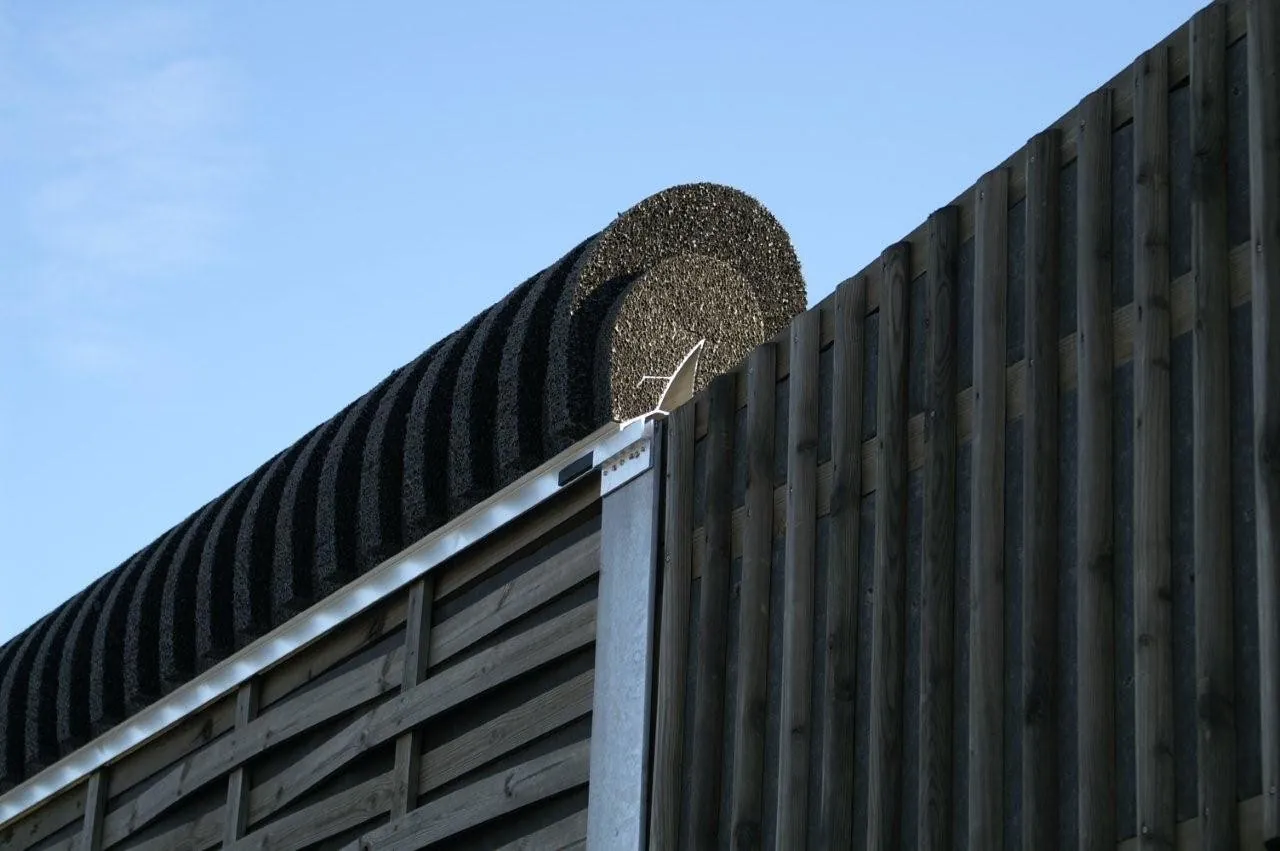
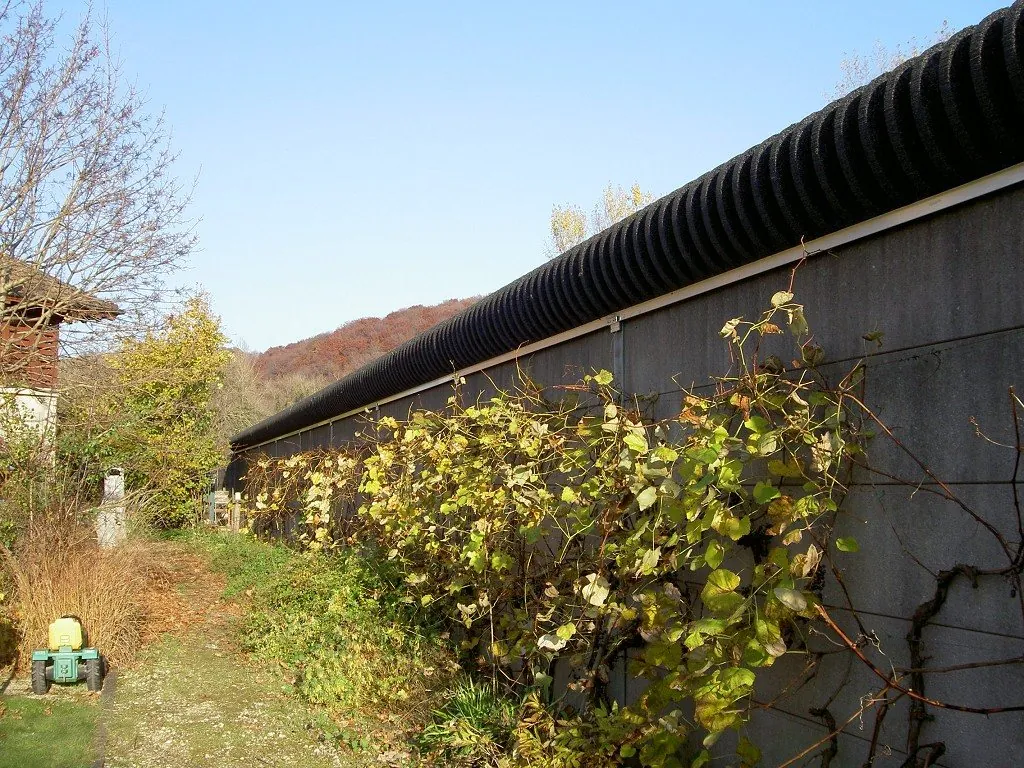
A top-edge element that makes existing noise barriers more effective — mounted on the posts that are already there.
How it works
Diffraction at the top edge.
A noise barrier does not simply block sound. At its top edge, sound bends — it is diffracted — around the edge and into the shadow zone behind the wall, where people live.
PIN sits exactly at that edge and changes how sound is diffracted there. Its soft, highly absorbing surface takes up part of the sound energy right at the edge.
As a result, less sound energy reaches the receiver behind the wall. The wall itself stays as it is.
Without PIN, the homes behind the wall lie in the yellow zone.
LEVELLoud
Quiet
Very loud · Loud · Fairly loud · Medium · Fairly quiet · Quieter · Quiet
Schematic illustration, levels illustrative. The effect is always assessed for the individual wall.
PIN Family
One principle. Several types.
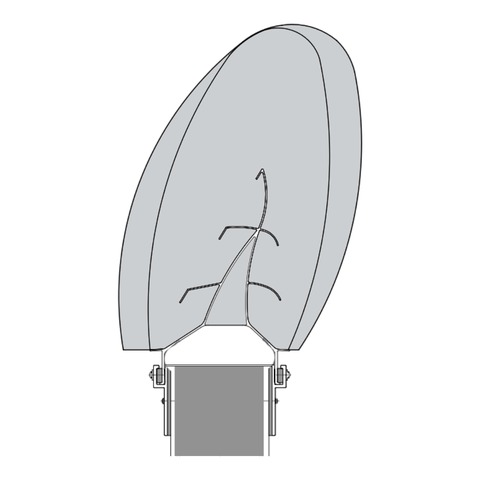
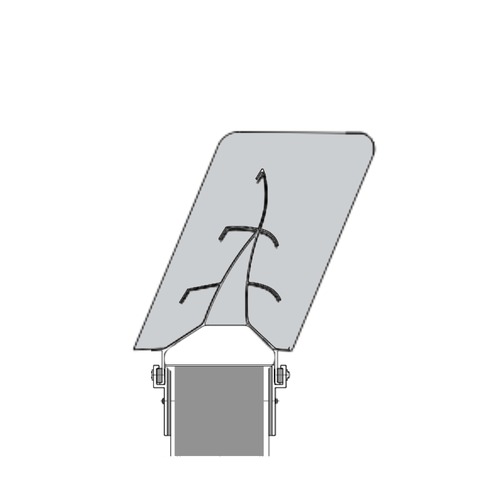
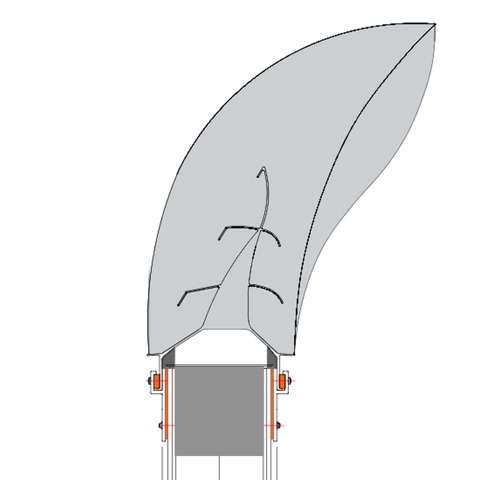
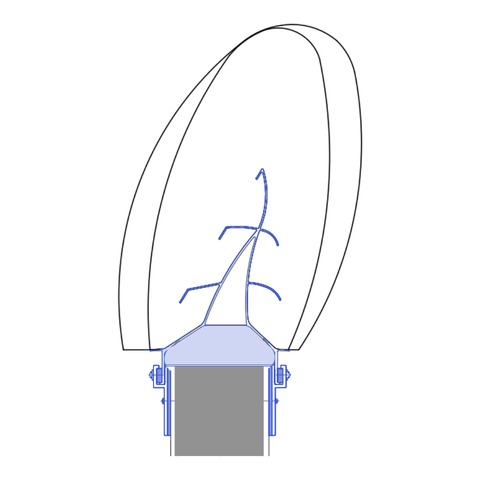
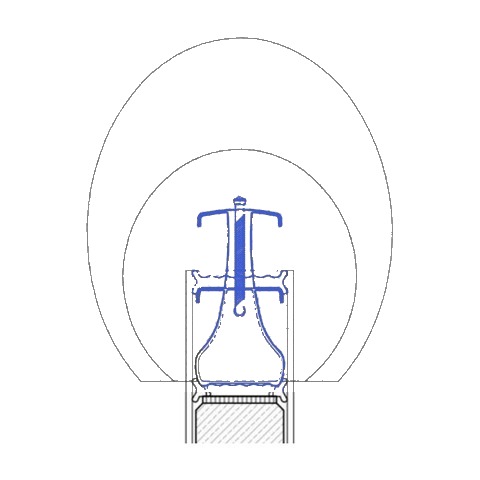
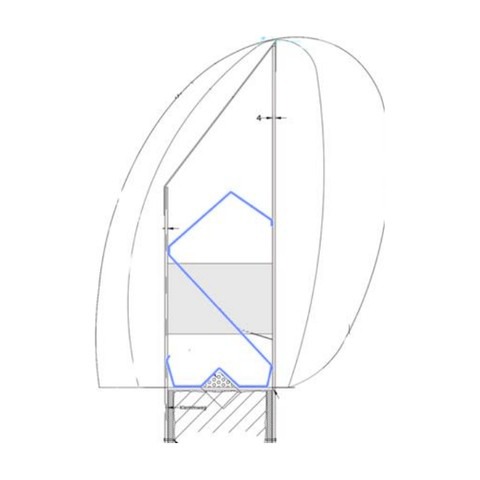
All types of PIN follow the same principle: a hard but flexible core and a soft, highly absorbing surface.
The standard cores are A and V, both made from an aluminium extrusion, and Z as the steel option. Classic, Pico and Curved are options for the shape of the foam. We are constantly testing new shapes and configurations.
ECO is the future of our absorption material, because it has an even lower CO₂ footprint.
Classic
Pico
Curved
Core A
Core V
Core Z
Installation
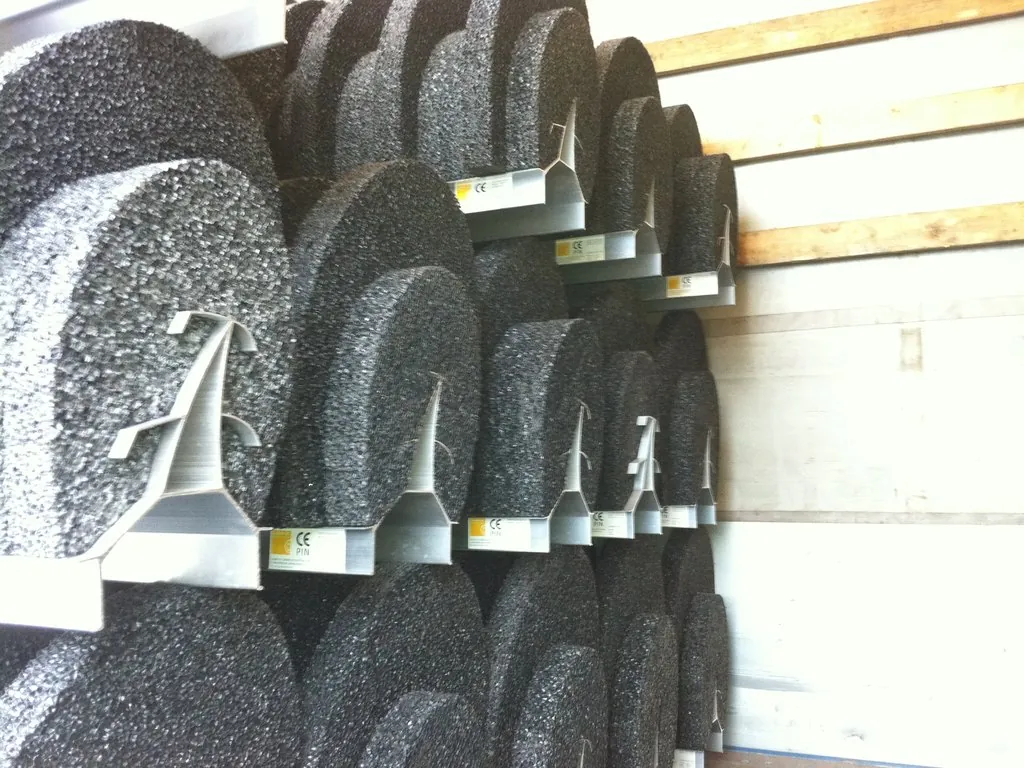
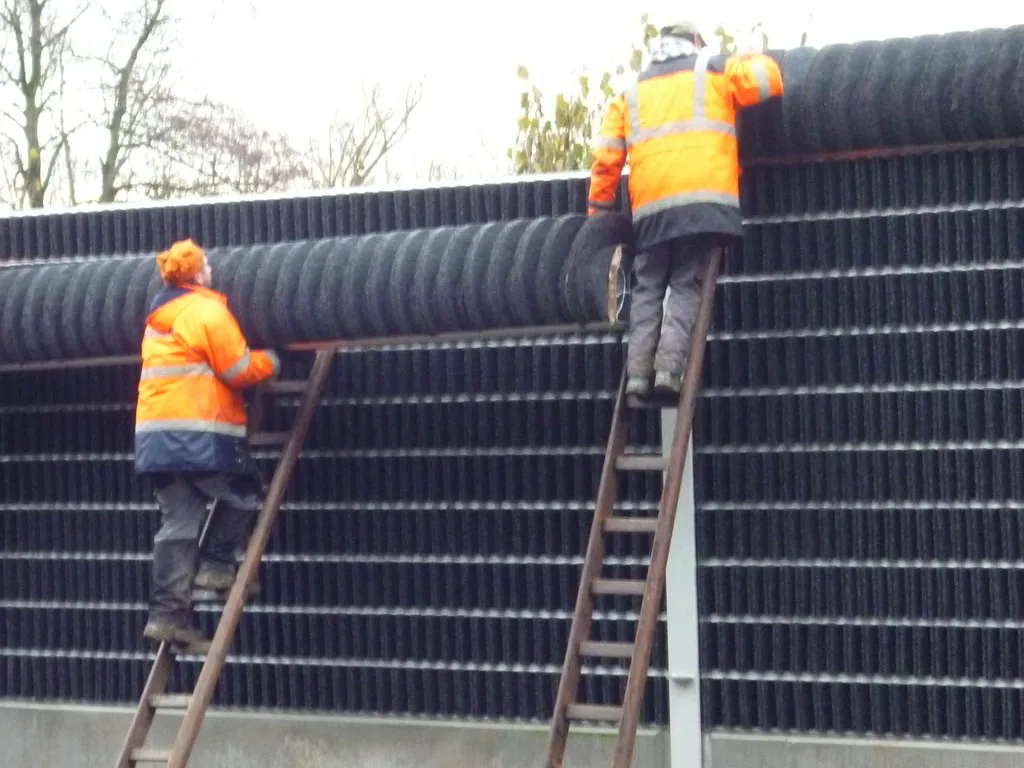
Quick mounting by hand.
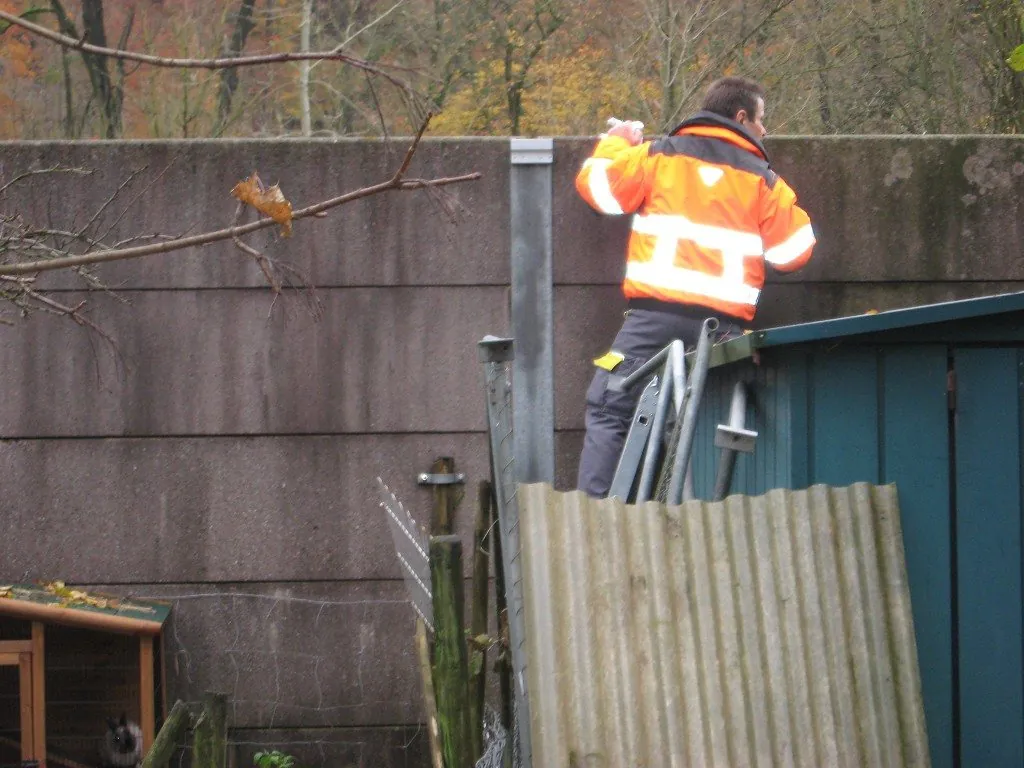
PIN is mounted on or in the existing posts — usually without new foundations and without rebuilding the wall. It is light and designed to be mounted by hand, also under traffic.
01
Delivery
The elements arrive ready to mount. They are light enough to be handled by hand on site.
02
Carrier profile
An aluminium carrier profile is fixed to the existing posts of the wall.
03
Mounting PIN
The PIN elements are lifted onto the profile by hand, one after the other, and secured.
04
Done
PIN runs as a continuous line along the crown. The wall itself stays as it is.
Material
Built to last.
PIN combines a hard but flexible core — as standard an aluminium profile — with a perforated closed-cell foam absorber. Closed-cell means that the cells of the foam are sealed off from one another; the perforation lets sound enter the material, where it is absorbed.
Both materials are chosen to be long-lasting outdoors, next to roads and railways.
Technical data
Element length
4 m*
Height / depth
500 mm / 370 mm
Weight
approx. 10 kg/m
Fastening
A: on the existing posts · V: in the existing posts
* Standard length; elements can be longer depending on requirements.
Independently measured
Around 4 dB, independently measured.
The effect of PIN is assessed for each individual wall.
How it was measured
Measured by an independent, accredited acoustic test laboratory.
In situ according to EN 1793-4 — on a real, 4 m high noise barrier at an outdoor test site.
The same wall measured with and without PIN.
All four foam versions tested: Classic, Classic ECO, Curved and Pico.
Result: around 4 dB, depending on the version.
Test reports and technical documents are available on request — we share them personally.
FAQ
Good questions.
Will PIN fit my wall?
PIN is designed to be mounted on the posts of existing noise barriers. Whether it suits your wall depends on the posts, the height and the condition of the barrier — we check this for each wall. A photo or a drawing is a good start.
Do I need new foundations?
Most likely not. PIN is a lightweight element that is fixed to the existing posts, so new foundations are usually not required. Whether the existing wall and its posts have sufficient static reserves is checked for each project.
How much effort is the installation?
Very little. The elements are lightweight and can even be installed by hand. They are mounted on (A) or in (V) the existing posts, and installation is possible while the road or railway stays in operation.
How much does PIN improve noise protection?
Acoustics are more complex than a single figure. Independent tests according to EN 1793-4 confirm an improvement of around 4 dB, depending on the version. The effect at a specific site depends on its geometry and on where the receivers are — we are happy to evaluate your situation.
Which version is right for my wall?
In most cases PIN Classic. Pico is the compact version where a lower height is needed; Curved is a special solution for special cases. We recommend a version once we know the wall.
Does PIN need maintenance?
PIN has no moving parts. We recommend including it in the regular inspections of the noise barrier.
Can a new wall be planned lower with PIN?
PIN can be included when a new barrier is planned. How this affects the design has to be assessed acoustically for each project — we are glad to support your planners.